
AP invoice volumes rarely stay static as organisations grow. New suppliers and organisational change increase AP workload. When processes are manual or fragmented, the result is predictable: overtime, backlogs, and pressure to hire.
Scaling AP without adding headcount is achievable, but only when the process is designed to reduce coordination work and absorb variation.
Why AP invoice volume growth increases complexity
As organisations grow, AP complexity increases faster than invoice count:
- More suppliers and formats
- More approval paths
- More entities and coding rules
- More non-PO spend
Each factor increases exception risk.
The real bottleneck: coordination of work
AP teams rarely struggle with data entry at scale. They struggle with coordination:
- Chasing approvals
- Following up on receipts
- Clarifying coding
- Responding to supplier queries
This work does not scale linearly.
Straight through processing as a capacity lever
Higher straight-through processing reduces routine handling, freeing AP capacity for exceptions.
This depends on:
- Stable rules
- Reliable upstream data
- Clear approval thresholds
Exception handling determines scalability
Efficient exception handling requires:
- Categorisation
- Clear ownership
- Context provided up front
- Escalation for delays
When AP is no longer the default coordinator, capacity increases.
Approver experience matters
Approvers delay when context is missing. Better context reduces delays and follow-ups.
What finance leaders should measure
- Invoices per FTE
- Exception rate and causes
- Approval cycle time
- Supplier query volumes
Scaling is working when throughput increases without quality loss.
Key takeaways
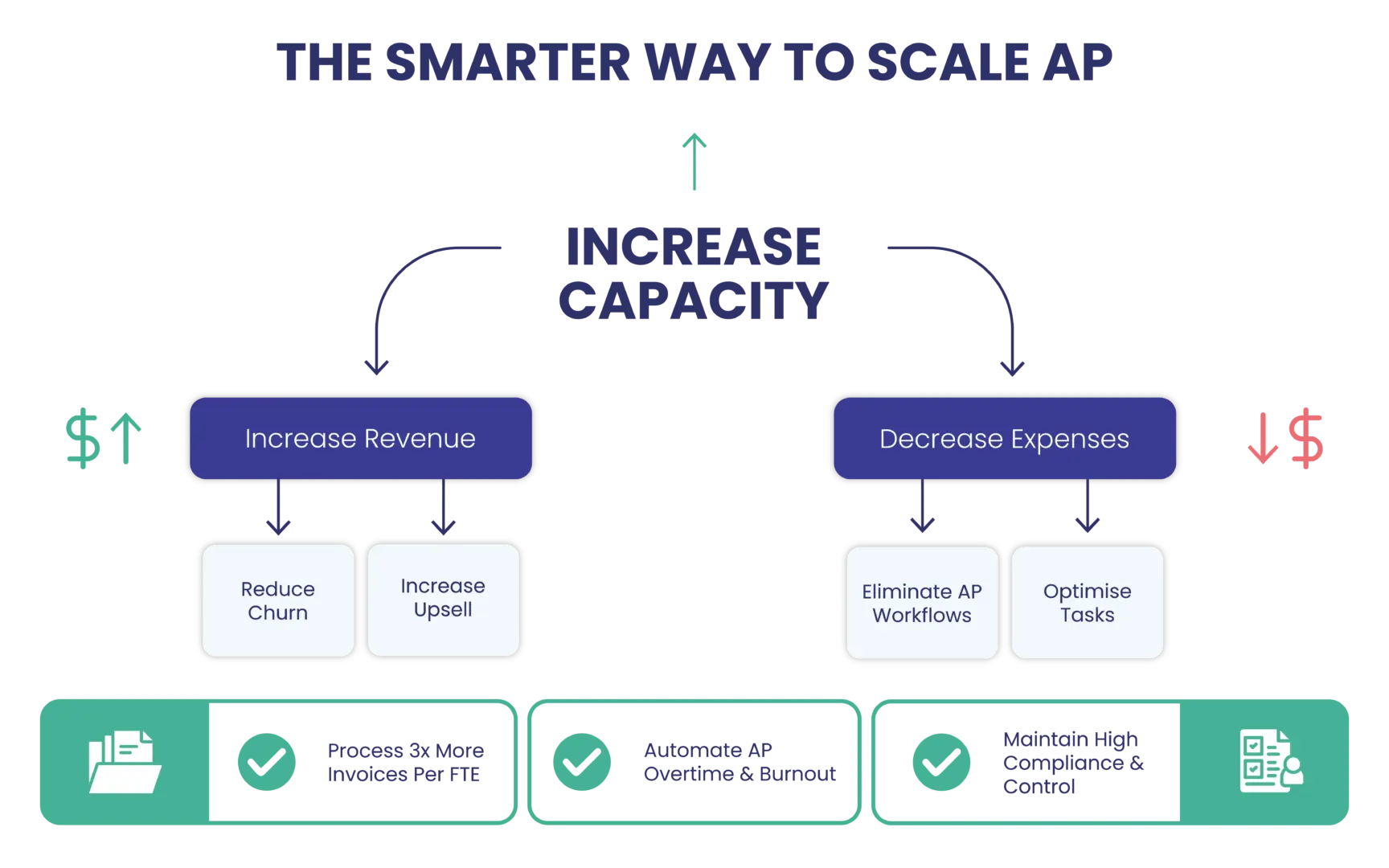
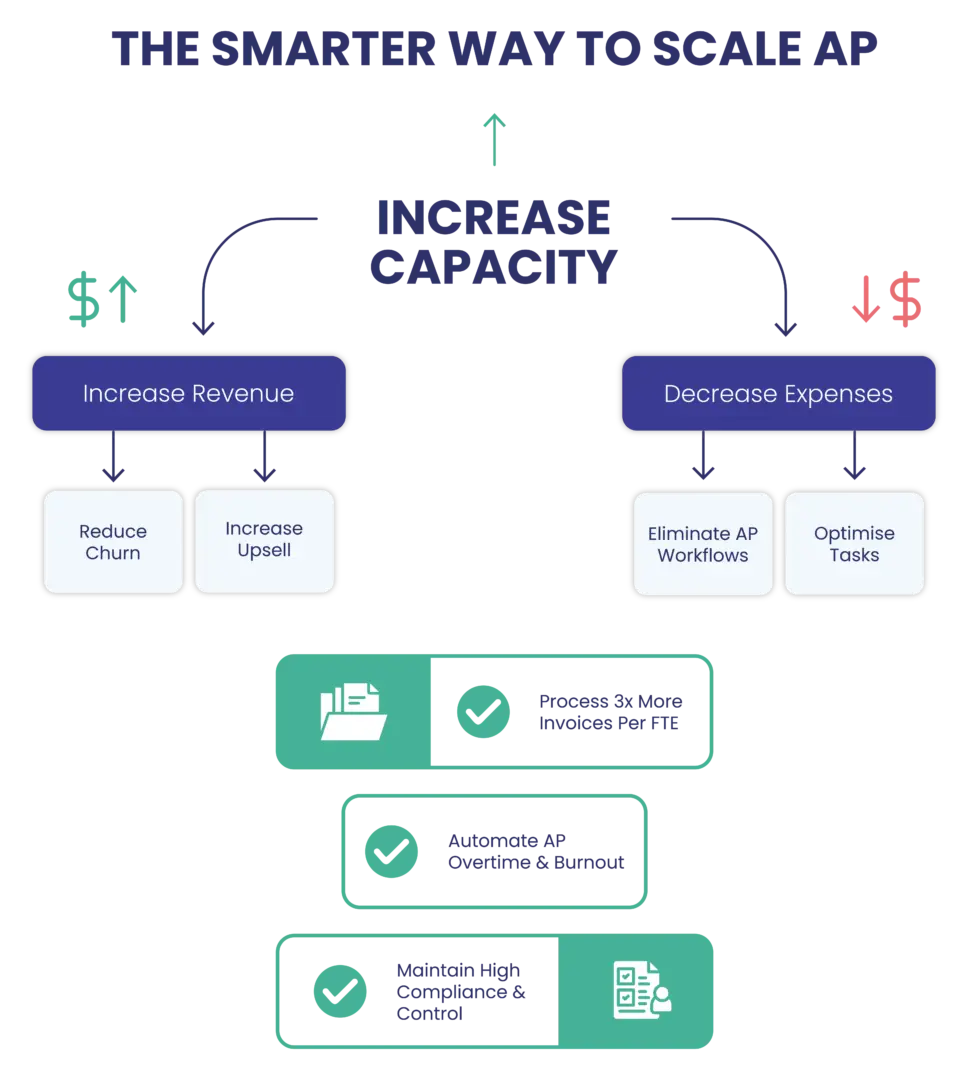
- Reduce coordination work (approvals chasing, receipt follow-ups, coding clarifications, supplier queries) because it’s the real scaling bottleneck.
- Increase straight-through processing with stable rules, reliable upstream data, and clear approval thresholds to free capacity for exceptions.
- Make exception handling structured and owned (categorise issues, assign clear owners, provide context upfront, escalate delays).
- Track scaling effectiveness with KPIs: invoices per FTE, exception rate/causes, approval cycle time, and supplier query volume.