
Cost per invoice is one of the most revealing AP metrics, yet it is often misunderstood. Many organisations calculate it narrowly and underestimate the true cost of invoice processing.
In reality, cost per invoice reflects every touch, delay, and rework cycle across the entire process. When it is high, the cause is rarely AP inefficiency. It is usually fragmented workflow, weak upstream discipline, and manual coordination work.
What cost per invoice really measures
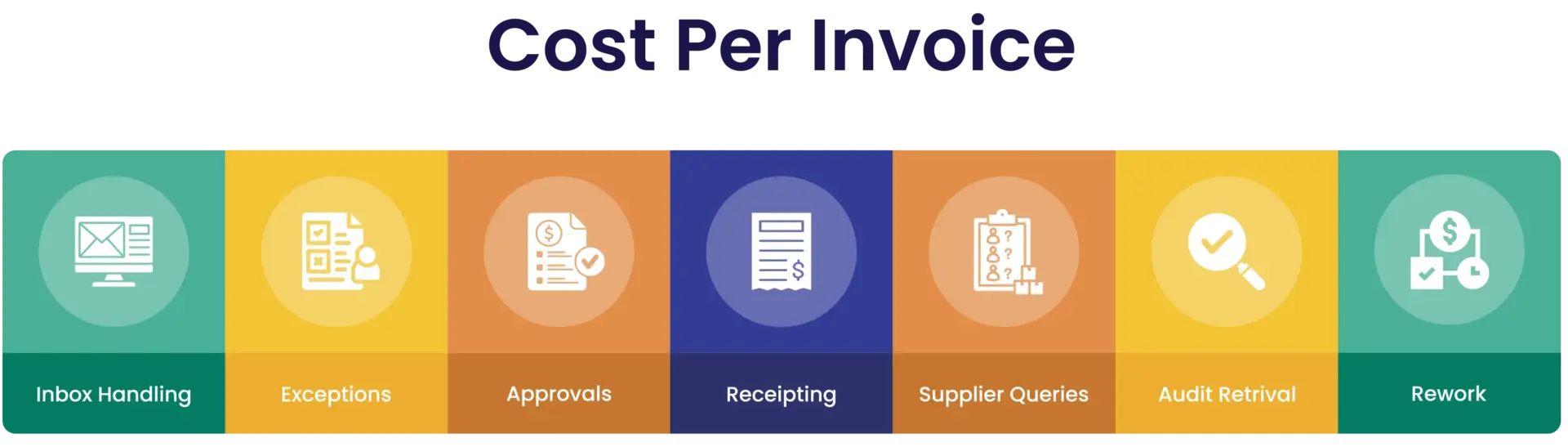
A realistic cost per invoice includes:
- AP handling across receipt, validation, and follow up
- Approver time and rework
- Exception investigation and coordination
- Supplier query handling
- Audit and document retrieval effort
- Systems and overhead costs
This makes cost per invoice a whole-of-process metric, not just an AP metric.
Why the cost creeps up unnoticed
Cost per invoice often rises gradually through small inefficiencies:
- Invoices arrive without POs
- Receipts are delayed
- Approvals stall
- AP chases information
- Suppliers follow up
Because this work happens in emails and calls, it is rarely captured explicitly, but it consumes time.
The most common cost drivers in practice
Add Your Heading Text Here
Manual inbox handling
Shared inboxes and email forwarding create unnecessary touches and tracking effort.
High exception rates
Each exception multiplies handling effort and delays posting.
Weak purchase order discipline
Non-PO invoices require more approvals and coordination.
Receipting delays
Unconfirmed receipts stall matching and increase follow up.
Approval bottlenecks
Unclear delegation and long approval chains slow processing.
Poor document traceability
Missing evidence increases audit and dispute handling effort.
Disconnected systems
Manual matching across systems creates “swivel chair” work.
Why these drivers reinforce each other
These drivers rarely occur alone. Missing POs create exceptions. Exceptions cause delays. Delays increase supplier queries. Queries increase AP workload. Over time, high cost per invoice becomes normalised.
Practical levers that reduce the cost
Validate early
Stop poor quality invoices before they enter approvals.
Enable low risk straight through processing
Apply rules and tolerances to reduce unnecessary review.
Treat exceptions as workflow issues
Categorise and route exceptions with ownership and context.
Simplify approvals
Align approval paths to real delegation and availability.
Centralise records
Keep invoices, evidence, notes, and approvals together.
Improve upstream discipline
Work with procurement and operations to reduce avoidable exceptions.
Measuring improvement credibly
CFOs expect to see sustained improvement, not one-off gains. Segmenting cost per invoice-by-invoice type often reveals where the biggest gains are possible.
Where RapidAP fits, briefly
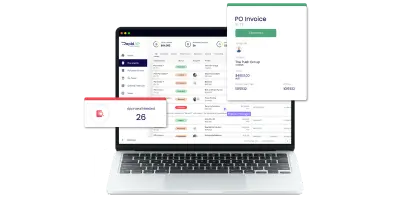
RapidAP supports rules based duplicate detection, PO matching where applicable, configurable approvals, exception routing, invoice repositories, and ERP integration. Invoice capture focuses on invoices and credit notes using ABBYY OCR.
Key takeaways
- Cost per invoice is a whole-of-process metric, covering every touchpoint from receipt through approvals, exceptions, supplier queries, audit retrieval and rework.
- High cost is usually driven by workflow friction, not AP team effort, missing POs, delayed receipting, stalled approvals and manual chasing.
- Cost drivers reinforce each other, creating compounding workload as delays trigger exceptions and supplier follow-ups.
- Sustainable reduction comes from removing touches early, using validation, rules-based straight-through processing, and structured exception routing with clear ownership.
- Measure improvement credibly over time, segmenting by invoice type (PO vs non-PO) to show where gains are real and repeatable.