
According to Ardent Partners, invoice exceptions are the bane of life for most accounts payable departments. Exceptions happen when the invoice enters the workflow but cannot progress through to payment because:
- Information on the invoice is missing,
- Details do not match those held in company systems for the purchase order or supplier,
- Internal paperwork to validate the invoice is missing, such as the goods receipt.
- Other issues, such as approval holdups.
Invoice exceptions weigh heavily on the accounts payable department as they usually need to be resolved by team members. This slows invoice processing times, adds to costs, and busies staff with mundane work that holds them back from their career-development goals.
Ardent Partners’ 2024 trends show that the invoice exception rate is steadfastly high, with a quarter of all invoices (25.5%) flagged for an exception. Firms that use procure-to-pay technologies fare much better, though, with an exception rate of around 10%. This is because automation software can head off many potential exceptions and give insight into areas where process or behavioural change is required.
How an automation solution reduces invoice exceptions
Here are some of the ways in which automation software can reduce the exception rate:
Data capture
A procure-to-pay solution uses integrated optical character recognition (OCR) technology to extract and process data from a PDF attachment or other file type. This means staff do not need to manually enter invoice information into company systems, which is where mistakes often happen, creating invoice exceptions.
Peppol access point
A Peppol-ready solution means that you and your trading partners can exchange procurement documents between your finance systems via the Peppol standard and communications network . This is the most efficient way of sending and receiving invoices as data arrives complete, structured, and ready for automated processing, dramatically decreasing the invoice exception rate.
Data validation
With a procure-to-pay solution, purchase requisitions are made and approved via a procurement platform with the system then generating purchase orders to preferred suppliers. When the purchase order invoice comes in, the solution can validate the payables against the order held in the system, and the goods receipt. If the data aligns – or is within a set tolerance – the invoice can be processed without human intervention, reducing the need for back-and-forth communication between AP and the supplier.
Supplier communications
If the AP Automation Platform immediately recognises that the invoice is not compliant, it can auto-generate an email back to the supplier, relieving accounts payable of this work. Some firms may, for example, have a ‘no purchase order, no pay’ policy for certain suppliers. If this is the case and accounts payable receives such an invoice, then the solution can auto-reject the invoice without staff members needing to get involved.
GL code non-purchase order invoices
The AP Automation Platform’s machine-learning capabilities also help to lower the exception rate. For repeat non-purchase order invoices from regular suppliers, the solution can auto-code these invoices based on their processing history, relieving system users of this coding work.
Procure-to-pay workflows
The solution will prevent processing hold ups by notifying users of their procure-to-pay tasks, such as approving purchase requisitions, coding or approving non-purchase order invoices, and receipting goods. The solution enforces accountability, issuing reminders until these tasks have been actioned. Consequently, accounts payable team members do not need to do this follow-up work, with the solution keeping track of the payable.
Measure performance
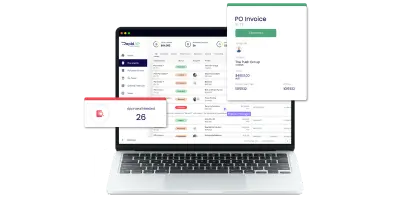
Some solutions offer a reporting dashboard to monitor accounts payable performance, with metrics such as the invoice exception rate, cost to process a single invoice, percentage of invoices linked to a purchase order, number of invoices processed a day by AP officer, and more. With these results, organisations can set targets for continuous improvement. Firms can also identify where process fine tuning, or additional guidance for system users or suppliers, is required to increase efficiency.
Value in business process optimisation
Outside of the exception management capabilities of an automation solution, there is also significant value in the business process re-engineering work that happens prior to automation. Getting a true handle on existing practices, challenging the way things are done, streamlining processes and attributing roles and responsibilities enable businesses to reduce the occurrence of exceptions.
Firms get the best results when they undertake change management work alongside a software investment to ensure that people – and the processes they follow – fully leverage the capabilities of the technology. But regardless of what the solution itself can do, automating manual processes will reduce invoice exceptions straightaway as the potential for human error is considerably reduced.
Conclusion
Invoice exceptions need to be resolved as businesses may otherwise be making overpayments, duplicate payments, and fraudulent payments. Exceptions cost an organisation significantly in:
- Time and labour costs,
- Negative impacts on staff,
- Late payments,
- Damaged supplier relations,
- Reputational damage.
Therefore, it’s important to get an organisation’s exception rate as low as possible using technology, process re-engineering, and change management activities on both the buyer and the suppliers’ side for faster payments and lower processing costs.